
Many well-intentioned literacy advocates focus on giving free books to children in underserved communities. The pathway to literacy, however, involves more than this one-time event. Achieving literacy is an educational process. This education starts at birth and continues throughout one’s lifetime. Any person, no matter their economic or family situation, can achieve literacy goals if given the opportunity and access to the right educational resources.
Definition of Literacy: Literacy is more than just learning to “read and write.” It also includes the learning of basic life skills.
Early Years: The Rotary Literacy Initiative’s literacy resources are mainly for children ages birth – 8
Window of Opportunity: Early years are when a child’s brain development and the accumulation of knowledge first takes place. During these critical years, children learn basic life skills more easily and efficiently…and these life skills will be the foundation for their future success.
Home: Home, not schools, is where early learning first begins to take place.
Parents: Parents are the first and most important teachers in the home
Love and Acceptance: The first and most important gift that parents give their children is instilling in them that they are special and that they will always be loved and accepted in the home.
Practice makes Perfect: Just like learning to play a musical instrument, learning life skills takes commitment, practice and repetition.
Learning Environment: It is important that parents create a “learning environment” in the home
Commitment to Education: An important part of creating a learning environment is the parents’ commitment to make “literacy” a priority in their home. Parents show their commitment by building a home library, reading books together, teaching life skills, and doing educational activities together
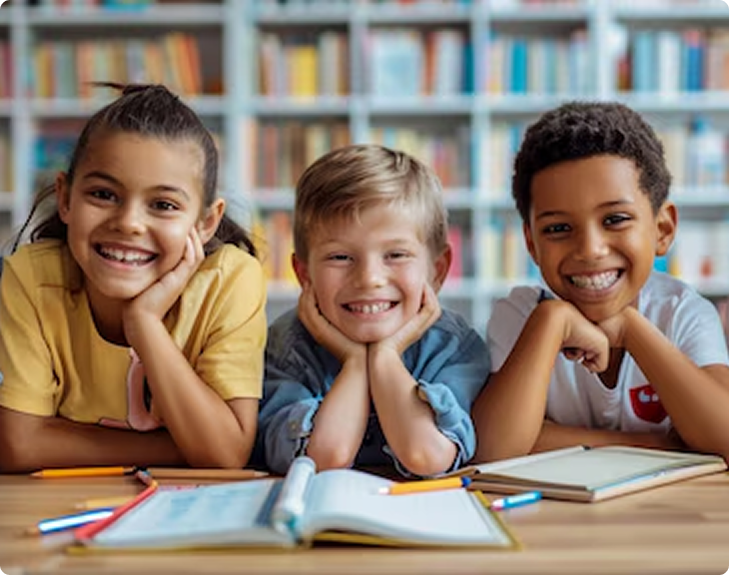
Physical Books: Physical books are important. Books are the main tools for parents and children to read and bond together. Books are the foundation for learning to read and write
Nonfiction Books vs. Fiction Books: Nonfiction Books give a straightforward approach to learning life skills. Fiction Books are more whimsical and make-believe. Both types of books are important for parents to read with their children
Life Skills Books: Life Skills Books (and companion multimedia E-books) inspire and motivate children to learn and practice valuable life skills in their daily activities
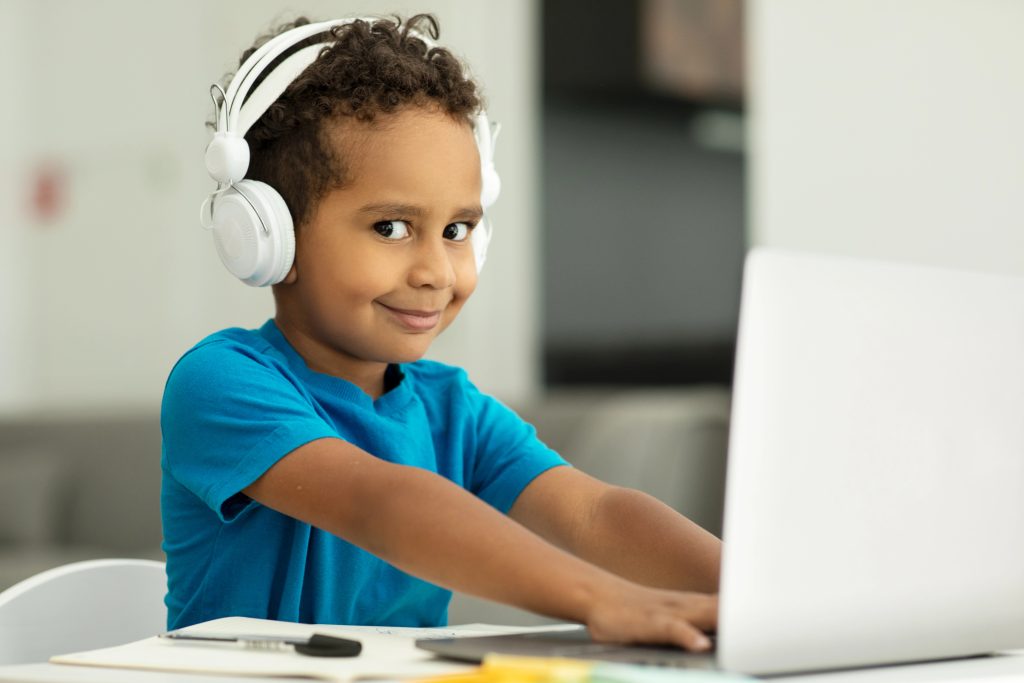
Educational Learning Games: The Reading Adventure Island streaming website also supports classroom learning with fun and entertaining games in the areas of reading, math, science, and language arts
Raising Smart Kids: These concepts are the foundation for the Rotary Literacy Initiative’s programs and resources. Families that commit to using these resources in the home, will nurture and raise Smart Kids—kids that are equipped to live their lives more intelligently and responsibly.
Learning to read is often celebrated as a pivotal milestone in a child’s early life, a marker of educational achievement, and a symbol of intellectual growth. Classrooms echo with the triumphant sounds of children decoding their first sentences, and parents beam with pride as their children turn the pages of picture books, stringing together words into meaning. Yet, beneath the celebration and the ceremony lies a profound truth: learning to read is not an end in itself, but a means to an end.
It is easy, especially in modern societies that value education, to regard reading as an ultimate goal. Standardized tests, grade-level benchmarks, and curricular milestones all seem to suggest that if a child can read at a certain level by a certain age, the battle has been won. However, this outlook risks missing the broader, richer value of literacy. Reading is not the final destination. Instead, it is the golden key that unlocks a universe of knowledge, understanding, and personal development.
Learning to read is similar to learning to play a musical instrument. Just as a musical instrument is meant for playing enjoyable and enriching music, reading is meant for constructing meaning—whether that meaning comes from stories, scientific explanations, historical narratives, or philosophical treatises. The act of deciphering words and sentences is merely the first step. The true purpose of reading lies in what one does with this newfound ability.
Consider the vast array of knowledge that lies ensconced in books, articles, and digital media. Reading provides access to this treasure trove, empowering individuals to explore worlds beyond their immediate experience. From a practical standpoint, the ability to read allows people to follow instructions, understand contracts, or navigate public transportation systems. From a more profound perspective, reading facilitates access to history, science, art, and philosophy, enabling readers to participate in the great conversations that have shaped and continue to shape humanity.
It is not enough to say that a person can read; what matters is what they read, how they read, and what they do with what they read. The ability to read Shakespeare opens the door to questions of morality, fate, and ambition. Reading scientific literature enables one to grasp the intricacies of the universe and the marvels of the natural world. Through reading, individuals can connect with cultures across continents and centuries, developing empathy and understanding that would otherwise be inaccessible.
The ultimate end of learning to read is not merely to accumulate information, but to develop the ability to think critically, question assumptions, and formulate reasoned responses to the world. Reading is the foundation upon which critical thinking is built. A literate individual can analyze arguments, detect biases, synthesize disparate ideas, and create new understandings.
In this sense, reading becomes an act of agency. It allows individuals to make informed choices not only in their personal lives but also as members of a broader community and society. Newspapers, essays, and even social media posts are subject to scrutiny and interpretation; without the ability to read thoughtfully, one risks becoming a passive consumer of information rather than an active participant in the shaping of one’s environment.
Beyond the acquisition of knowledge and the honing of critical faculties, reading serves as a means of self-discovery and personal growth. Literature, in all its forms, offers mirrors in which readers can see themselves and windows through which they can view others. Through stories, poems, biographies, and essays, readers vicariously experience joys and tragedies, triumphs and setbacks, gaining insight into the complexity of the human condition.
Moreover, the more one reads, the more one becomes capable of expressing themselves. Exposure to varied voices, genres, and styles inspires and equips individuals to articulate their own thoughts, feelings, and experiences. This is the beginning of writing, of speech, of dialogue—skills that flow directly from literacy yet transcend the mere act of decoding text.
If we consider learning to read as an end in itself, we run the risk of narrowing its scope to mere mechanics. This reductionist approach might produce individuals who can read the words but fail to grasp the meaning, intent, or beauty behind them. The phrase “literate but unlearned” comes to mind—those who can process text but do not reflect, question, or grow.
Education systems that focus solely on reading scores or technical proficiency may inadvertently create such outcomes. It is essential, therefore, to cultivate not just the ability to read, but also the motivation, curiosity, and discernment that turn reading into an instrument for lifelong learning.
Reading is also a social act. Shared texts provide common ground for discussion and debate. Communities and societies are built on the exchange of ideas, many of which are transmitted and preserved through written word. The ability to read, then, is foundational to participating in civic life—reading laws, understanding civic duties, and engaging in informed debate.
When reading is seen as a means rather than an end, it is clear that literacy undergirds democracy and social progress. Literate citizens are better equipped to recognize injustice, advocate for themselves and others, and contribute to the collective good.
Not all ends are grand or external. Reading, too, is a wellspring of pleasure and personal enrichment. The experience of becoming lost in a novel, of laughing at a clever turn of phrase, or of shivering at a suspenseful plot twist is its own reward. This joy, however, is made possible only by first learning to read—by gaining the key that unlocks the library of human creativity.
Reading for pleasure can foster a lifelong love of books and stories, fueling curiosity, imagination, and resilience. It teaches us that reading is not a chore, but a privilege and a delight—a tool that enriches our lives in countless, sometimes unexpected, ways.
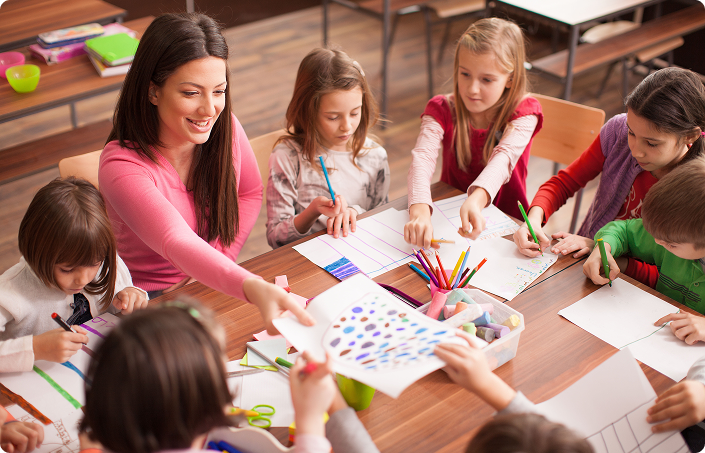
Given the instrumental and transformative power of reading, educators and parents bear a profound responsibility. Their role is not just to teach children how to read, but to help them see why reading matters. This means encouraging curiosity, providing access to diverse texts, modeling thoughtful reading, and engaging in conversations about what has been read.
When children understand that reading is a pathway—to knowledge, to self-expression, to empathy, to joy—they are more likely to become lifelong learners. The goal should be to cultivate not just readers, but thinkers, creators, and participants in the wider world.
To learn to read is to acquire one of the most powerful tools available to humanity. But the journey does not end with the ability to decode letters and words. Rather, it is just beginning. Reading is the means by which we engage with the world, expand our minds, connect with others, and shape our own destinies. As we teach and learn to read, let us remember: it is not the final destination, but the bridge to a thousand destinations yet unimagined.